
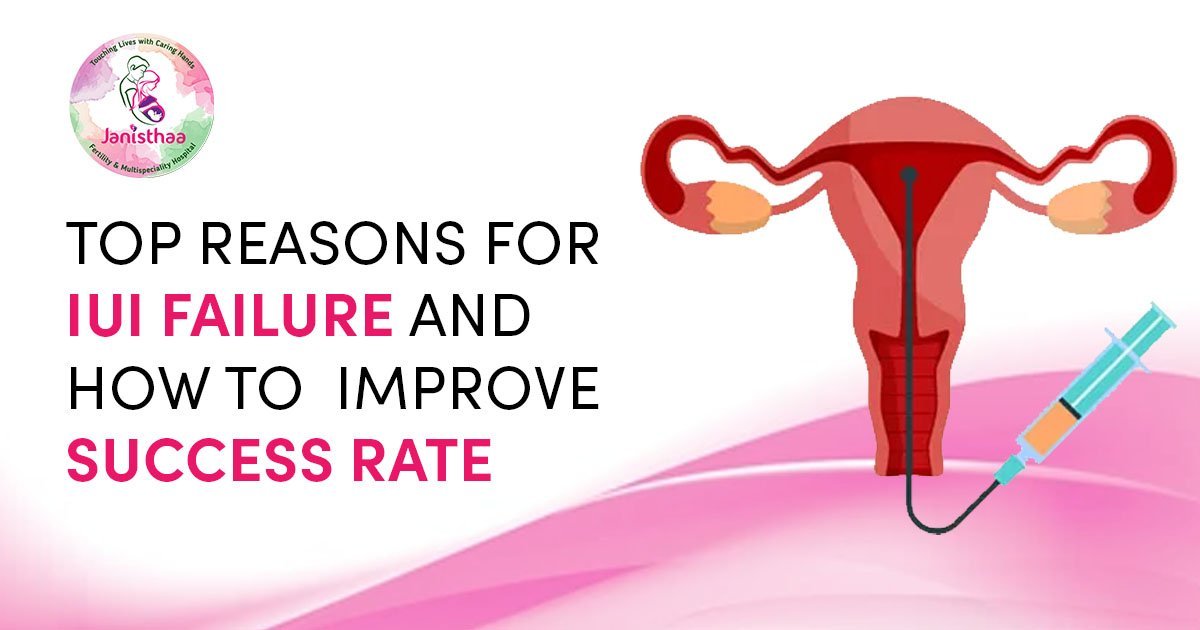
Top Reasons for IUI Failure and How to Improve Success Rates
The journey to motherhood can be stressful on both sides for couples who are having trouble getting pregnant. A minimally

IUI (Intrauterine Insemination) is a fertility treatment in which specially prepared sperm is placed directly into a woman’s uterus around the time of ovulation.
IUI is often recommended as a first-line fertility treatment because it is less invasive, more affordable, and simpler compared to advanced procedures like IVF.
IUI is a form of artificial insemination, where sperm is medically processed and inserted into the reproductive tract using a thin catheter. Before insemination, sperm undergoes sperm washing, a laboratory process that separates healthy, motile sperm from seminal fluid and impurities. This improves sperm quality and reduces the risk of uterine irritation.
| Component | Cost (INR) | Details |
|---|---|---|
| IUI Procedure (Sperm Preparation + Insemination) | ₹8,000 – ₹12,000 | Includes sperm washing and insemination procedure |
| Ovulation Monitoring Scans (2–3 Scans) | ₹1,500 – ₹3,000 | Follicular scans to identify the ideal ovulation window |
| HCG Trigger Injection | ₹1,000 – ₹2,000 | Helps trigger ovulation at the right time |
| Ovulation Induction Medications (If Required) | ₹2,000 – ₹5,000 | Fertility medicines such as Letrozole or Clomiphene |
| Progesterone Support After IUI | ₹1,500 – ₹3,000 | Medication to support implantation and early pregnancy |
| Total IUI Cycle Cost | ₹10,000 – ₹20,000 | Cost varies depending on treatment protocol |
| Donor Sperm IUI (If Needed) | ₹15,000 – ₹25,000 | Includes donor sperm and sperm bank charges |
Prices applicable for 2026. A complete cost estimate is shared before treatment begins. Final costs may vary depending on medications, scan frequency and individual treatment requirements.
| Step | What Happens | When | Duration |
|---|---|---|---|
| 1. Initial Consultation | Dr. Shwetha reviews medical history, semen analysis, HSG, and AMH reports to confirm if IUI is suitable. | Day 1 | 45 minutes |
| 2. Cycle Monitoring Starts | Baseline ultrasound is done on Day 2–3 of the menstrual cycle. Fertility medications may be started if required. | Day 2–3 | 15 minutes |
| 3. Follicle Tracking | Ultrasound scans are performed every 2–3 days to monitor follicle growth and identify ovulation timing. | Days 9–14 | 15 minutes per scan |
| 4. HCG Trigger Injection | Trigger injection is given once the follicle matures. IUI is planned about 36 hours later. | Day 12–16 | Home injection |
| 5. Sperm Preparation | The semen sample is processed in the laboratory to prepare motile sperm for insemination. | IUI Day | 1–2 hours |
| 6. IUI Procedure | The prepared sperm is inserted into the uterus using a soft catheter. No anaesthesia is required. | IUI Day | 10–15 minutes |
| 7. Post-IUI Rest | Short rest at the clinic after the procedure. Most patients can return to normal activities the same day. | Same Day | 15 minutes |
| 8. Luteal Phase Support | Progesterone support is started after IUI and continued until the pregnancy test. | After IUI | Daily |
| 9. Pregnancy Test | Blood beta hCG test is done 14 days after IUI to confirm pregnancy. | 14 Days Post-IUI | Same-day result |
| Your Situation | Is IUI Recommended? | Reason |
|---|---|---|
| Unexplained infertility, below 35 years, trying for 12+ months | ✅ Yes | IUI is usually the first treatment option and is cost-effective |
| Mild male factor infertility (sperm count 5–15 million/mL, motility above 20%) | ✅ Yes | Sperm washing improves the concentration of healthy sperm |
| PCOS with irregular ovulation | ✅ Yes, with ovulation induction | Ovulation can be monitored and timed accurately with IUI |
| Single women or same-sex couples using donor sperm | ✅ Yes | Donor sperm IUI is a simple and commonly used option |
| Cervical mucus issues | ✅ Yes | IUI bypasses the cervix and places sperm directly into the uterus |
| Blocked fallopian tubes | ❌ No | At least one open fallopian tube is necessary for IUI success |
| Severe male factor infertility (very low count or poor motility) | ❌ No | IVF with ICSI is generally recommended |
| Previous unsuccessful IUI cycles | ❌ IVF Recommended |
|
| Age-related fertility considerations | ⚠️ Consultation Needed | Age, ovarian reserve and other fertility factors are reviewed before deciding whether IUI or IVF is the more appropriate treatment option. |
| Moderate to severe endometriosis | ❌ Usually No | IVF is often preferred due to possible tubal or ovarian damage |
One of the most common fertility questions couples ask is whether IUI or IVF is the better option. The right treatment depends on age, fertility diagnosis, sperm quality, tube health, and previous treatment history.
| Factor | IUI | IVF |
|---|---|---|
| Procedure Type | Minimally invasive procedure | Advanced fertility treatment with egg retrieval |
| Sedation Required | No | Yes, during egg retrieval |
| Cost Per Cycle | ₹10,000–20,000 | ₹80,000–1,60,000 |
| Fallopian Tubes | At least one healthy open tube required | Tubes not required — IVF bypasses them |
| Sperm Quality Needed | Suitable for mild to moderate male factor infertility | Can treat severe male factor infertility using ICSI |
| Typical Number of Cycles | Usually 3 cycles before moving to IVF | Often successful within 1–2 cycles |
| Egg Retrieval Procedure | Not needed | Required |
| Recovery Time | Resume normal routine immediately | 1–2 days recovery after retrieval |
| May Be Considered For | PCOS, ovulation disorders, unexplained infertility, mild male factor | Blocked tubes, low ovarian reserve, repeated IUI failure, severe male factor, age above 38 |
Dr. Shwetha’s Guidance:
There is no single number of IUI cycles that is right for every patient. The decision to continue IUI or consider IVF depends on factors such as age, ovarian reserve, fallopian tube status, sperm parameters, the cause of infertility and how previous IUI cycles responded.
After each cycle, Dr Shwetha reviews the treatment response and advises whether another IUI cycle is reasonable or whether a different fertility treatment should be considered.
IVF may be discussed earlier when:
At Janisthaa IVF, Dr. Shwetha reviews every IUI cycle outcome and gives you an honest recommendation — not a blanket “try 6 more times” advice.
Dr. Shwetha will review your semen analysis, tube status, and ovarian reserve — and give you an honest recommendation on whether IUI is the right starting point or whether you should consider IVF directly.
No referral needed. Bring previous fertility tests if available.
Direct guidance and customised fertility plans.
Easy access and convenient treatment locations.
Treatment costs and expected requirements are explained based on your individual treatment plan.
IVF, ICSI, IUI, and more under one roof.
Patient-first care with emotional support.


Read experiences shared by patients who have consulted Dr Shwetha and the Janisthaa care team.





The journey to motherhood can be stressful on both sides for couples who are having trouble getting pregnant. A minimally

Finding the right sleeping position after IUI can make a significant difference in the success of your treatment. Resting comfortably
As most of us know intrauterine insemination (IUI) and in vitro fertilization (IVF) are two different forms of fertility treatments. However, you may lack
IUI at Janisthaa IVF Bangalore costs ₹10,000–20,000 per cycle, including follicular monitoring scans, HCG trigger injection, sperm preparation, and the insemination procedure. Ovulation induction medications (if needed) add ₹2,000–5,000. Donor sperm IUI costs ₹15,000–25,000 including sperm bank fees. A full cost breakdown is provided before starting treatment. There are no hidden charges.
IUI outcomes vary based on factors such as age, the cause of infertility, ovulation, fallopian tube health and sperm parameters, so a single percentage would not accurately represent every patient. At your consultation, Dr Shwetha reviews your medical history and fertility test results and explains whether IUI is an appropriate option for your individual situation.
No. IUI is not painful. The procedure involves passing a thin, flexible catheter through the cervix into the uterus — similar in sensation to a cervical smear test. Most women feel mild cramping for a few minutes during and after the procedure. No sedation or anaesthesia is required. You can return to normal activity the same day.
The IUI procedure itself takes 10–15 minutes. Sperm preparation in the laboratory takes 1–2 hours before the procedure. Including preparation time and post-procedure rest, expect to spend approximately 2–3 hours at the clinic on IUI day. Monitoring visits during the stimulation phase (2–3 visits) take 15–20 minutes each.
Most fertility specialists recommend 3 IUI cycles before considering IVF. After 3 cycles, the marginal success rate of additional IUI cycles drops significantly. However, women over 38, those with declining AMH, or those with identified causes that respond better to IVF may be advised to move sooner. Dr. Shwetha reviews every cycle outcome before recommending next steps.
IUI may be considered for some mild male-factor fertility concerns depending on sperm count, motility and the couple’s overall fertility evaluation. When sperm parameters are significantly affected, Dr Shwetha may discuss other treatment options such as IVF with ICSI.
Donor sperm IUI uses sperm from an anonymous, medically screened donor from a licensed sperm bank. It is used by single women, same-sex couples, or couples where the male partner has no viable sperm (azoospermia). The IUI procedure itself is identical to standard IUI. At Janisthaa, donor sperm IUI is handled with complete confidentiality and all ethical and legal protocols under the ART Act 2021.
Some insurance policies now cover IUI treatment in India, though coverage varies by provider and policy. Janisthaa's patient support team can help prepare the documentation required for insurance claims. We provide all medical reports, cost summaries, and prescriptions required for the process.
IUI places prepared sperm inside the uterus around ovulation, while fertilisation still occurs inside the body. IVF involves retrieving eggs, fertilising them in a laboratory and transferring an embryo into the uterus. IUI is generally less invasive and lower in cost, while IVF may be considered when factors such as blocked tubes, significant male-factor infertility, reduced ovarian reserve or previous treatment history make it more appropriate.
Female Fertility Treatments and Conditions:
Copyright © 2026 Janisthaa Fertility and IVF Center. All Rights Reserved.